

Crepe bandage elastic is a common medical product that has been used for a variety of purposes, including wound dressing and support. One question that often arises is whether it can be effectively used for sports injuries. As a supplier of Crepe Bandage Elastic, I will explore this topic in detail, examining the properties of crepe bandage elastic, its benefits and limitations in treating sports injuries, and how it compares to other types of bandages.
Properties of Crepe Bandage Elastic
Crepe bandage elastic is made from a woven fabric that has a characteristic crinkled or "crepe" texture. This texture gives the bandage stretch and flexibility, allowing it to conform to the body's contours and provide support without restricting movement too much. The elastic nature of the bandage helps to maintain a consistent level of pressure on the injured area, which can be beneficial for reducing swelling and providing stability.
One of the key features of crepe bandage elastic is its breathability. The open weave of the fabric allows air to circulate around the skin, which helps to prevent moisture buildup and reduce the risk of skin irritation. This is particularly important for sports injuries, as athletes often sweat during physical activity, and a non - breathable bandage can lead to discomfort and skin problems.
Benefits of Using Crepe Bandage Elastic for Sports Injuries
Swelling Reduction
When an athlete suffers a sports injury, such as a sprain or strain, swelling is a common symptom. The pressure exerted by the crepe bandage elastic can help to limit the amount of fluid that accumulates in the injured area. By applying gentle, consistent compression, the bandage encourages the re - absorption of excess fluid into the bloodstream, reducing swelling and promoting faster recovery.
Support and Stability
For injuries like ankle sprains or wrist strains, crepe bandage elastic can provide the necessary support to the affected joint. It helps to keep the joint in a proper alignment, preventing excessive movement that could further damage the injured ligament or muscle. This is especially useful during the early stages of injury when the joint is still vulnerable.

Comfort and Flexibility
During sports activities, athletes need to be able to move freely. Crepe bandage elastic offers a good balance between support and flexibility. It can move with the body, allowing the athlete to perform a full range of motion without feeling overly restricted. This is an advantage compared to rigid splints or braces that may limit mobility.
Breathability and Skin Friendly
As mentioned earlier, the breathability of crepe bandage elastic makes it suitable for use during sports. It reduces the likelihood of skin problems, such as rashes or infections, which could be exacerbated by the heat and moisture generated during physical activity. The soft fabric is also gentle on the skin, making it comfortable to wear for extended periods.
Limitations of Crepe Bandage Elastic in Sports Injuries
Limited Compression Control
While crepe bandage elastic can provide some level of compression, it may not be as effective as some specialized compression bandages in providing a precise and consistent level of pressure. In some cases, the bandage may loosen over time, especially if the athlete is engaging in vigorous physical activity, reducing its effectiveness in swelling control.
Not Suitable for Severe Injuries
For severe sports injuries, such as fractures or major ligament tears, crepe bandage elastic alone may not be sufficient. In these cases, more specialized medical interventions, such as casting or surgical repair, are usually required. The bandage can be used as a temporary measure to provide some support and reduce minor swelling, but it should not replace professional medical treatment.
Durability
Crepe bandage elastic may not be as durable as some other types of bandages. Repeated stretching and movement during sports can cause the fabric to wear out more quickly, which means it may need to be replaced more frequently.
Comparison with Other Types of Bandages
PBT Conforming Bandage
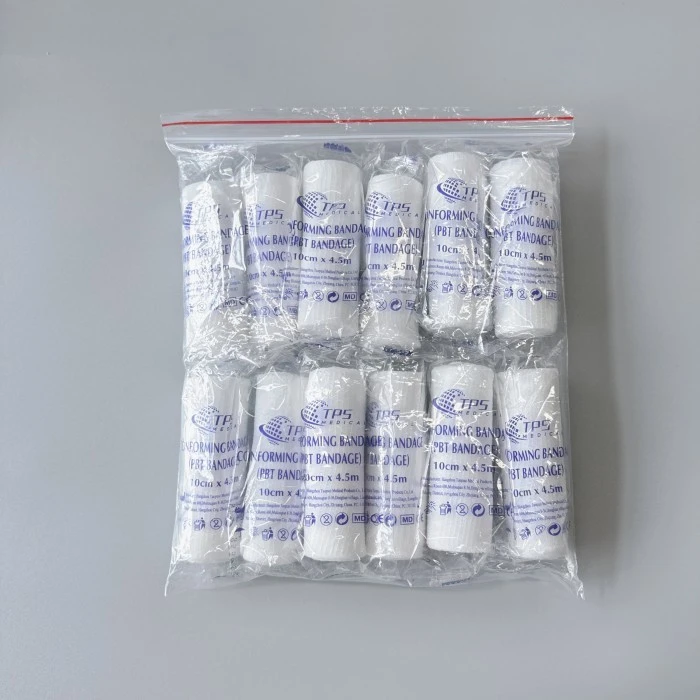
PBT Conforming Bandage is another type of bandage commonly used for sports injuries. Compared to crepe bandage elastic, PBT conforming bandage offers a more precise and consistent level of compression. It is also more resistant to stretching and is less likely to loosen during movement. However, PBT bandage may be less breathable than crepe bandage elastic, which could be a drawback for athletes who sweat a lot.
High Elastic Bandage
High Elastic Bandage is designed to provide a high level of stretch and compression. It can conform tightly to the body, providing excellent support for sports injuries. But the high - level compression may be too restrictive for some athletes during certain activities. Crepe bandage elastic, on the other hand, offers a more moderate level of compression and greater flexibility, making it a better choice for some less - severe injuries or for athletes who need more freedom of movement.
Recommendations for Using Crepe Bandage Elastic in Sports Injuries
Proper Application
To ensure the effectiveness of crepe bandage elastic, it is important to apply it correctly. Start by wrapping the bandage loosely around the injured area, making sure it is not too tight to cut off circulation. Overlap each layer of the bandage by about half its width to ensure even pressure distribution. Pay attention to any signs of discomfort or numbness, as this may indicate that the bandage is too tight.
Size Selection
Choose the appropriate size of crepe bandage elastic based on the area of the injury. A bandage that is too narrow may not provide enough support, while a bandage that is too wide may be difficult to wrap tightly and may not conform well to the body.
Use in Combination
For some sports injuries, it may be beneficial to use crepe bandage elastic in combination with other treatments. For example, it can be used after applying an ice pack to reduce swelling or in conjunction with physical therapy exercises to provide additional support.
Conclusion
In conclusion, crepe bandage elastic can be a useful tool for treating sports injuries. Its stretch, flexibility, and breathability make it suitable for providing support, reducing swelling, and allowing athletes to maintain a certain degree of mobility. However, it also has its limitations and may not be suitable for all types of injuries. When considering using crepe bandage elastic for sports injuries, athletes and medical professionals should take into account the severity of the injury, the type of activity, and the individual needs of the patient.
As a supplier of high - quality Crepe Bandage Elastic, we are committed to providing products that meet the highest standards of quality and performance. If you are interested in purchasing our crepe bandage elastic for sports injury management or other medical applications, please feel free to contact us for more information and to discuss your specific requirements. We look forward to the opportunity to work with you and contribute to the well - being of athletes and patients.
References
- American Orthopaedic Society for Sports Medicine. (2023). Guidelines for the treatment of common sports injuries.
- British Journal of Sports Medicine. (2022). Research on the use of different types of bandages in sports injury management.
- World Health Organization. (2023). Best practices for wound care and support in physical activity - related injuries.